

Where Is Cover Girl Makeup Made
The Untold Truth Of CoverGirl
Rachel Murray/Getty Images
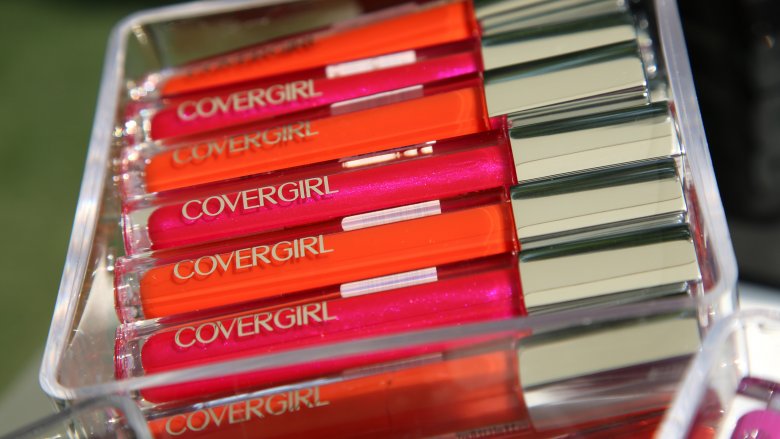
CoverGirl is positively iconic, and yous even don't take to wearable makeup to know that. CoverGirlis a household proper noun, after all. The cosmetics company is one of the most well known in the world, and even those who aren't makeup gurus are probably familiar with the brand. CoverGirl has long been known for using famous models, actors, and other pop civilisation figures to represent the cosmetics line, but there is so much more to the company than gorgeous celebs and quality, affordable makeup.
If you retrieve that you know everything at that place is to know about CoverGirl, think over again. CoverGirl has a long and fascinating history that volition be surprising even to those who consider themselves to be true CoverGirl aficionados. From the brand's early years to its continued impact on the beauty manufacture, to the possible futurity of the company, hither's everything most CoverGirl that every beauty lover should know.
CoverGirl was originally a small line of medicated makeup products
When CoverGirl first started out, the company wasn't planning on launching a massive makeup line that would get one of the best known in the earth. According to Cosmetics and Skin, the company rolled out with a handful of medicated makeup products. Outset launched in 1961, the starting time CoverGirl products contained the bactericides methylparahydroxybenzoate, propylparahydroxybenzoate and hexachlorophene. The company claimed that these products were "really good for the skin" and "meliorate than not using make-upward at all" as these bactericides were thought to fight off pimples and skin blemishes.
According to The American Dazzler Industry Encyclopedia, the earliest CoverGirl products included liquid and pressed powder foundations, tube makeup, and "brush-on blushes." It launched with just three shades of foundation, catering to lighter skin tones. The company has certainly come a long mode since those early on years and now boasts a host of other beauty products including mascara, eye shadow, and eyeliner.
You might recognize CoverGirl's parent company from this beauty staple
When CoverGirl was launched, it wasn't as role of an independent cosmetics line. Instead, it was part of the Noxzema Chemical Company. Today, the name Noxzema is mostly recognized for Noxzema Peel Cream, a medicine cabinet staple for more than half a century. According to Byrdie, Noxzema was developed in the early 20th century as a sunburn remedy. It was later found to also help alleviate itchy skin and eczema, helping to ensure that it reached mainstream success.
By the 1950s, Noxzema Skin Foam was being sold equally a cleanser and common cold cream, and it became a part of the dark skincare routines of countless people. In the 21st century, Noxzema is withal a upkeep beauty must-take that is widely used, although it's considered to exist a bit old-fashioned these days. Even if yous don't use the product yourself, though, y'all are nonetheless likely to discover a bottle of the drugstore common cold cream on your mother'south nightstand.
CoverGirl helped popularize contouring in the 1960s
Shutterstock
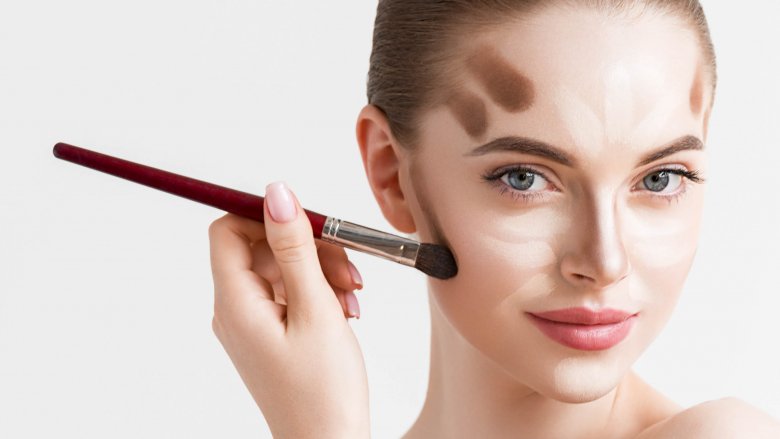
While many people frequently recall of contouring as a mod dazzler trend, it actually has deep roots. Contouring has long been used in the theater, and, as a mainstream beauty style, information technology was popularized by CoverGirl in the 1960s. CoverGirl actually used contouring every bit a marketing tactic. According to a 1964 CoverGirl ad (via Cosmetics and Skin), people were encouraged to buy more than than one shade of CoverGirl products in order to profile (and, of class, increase CoverGirl'south sales). People were encouraged to "apply lighter shades to accentuate or bring frontwards features that demand emphasizing" and to "utilise darker shades for contrast or to diminish features that may appear too prominent."
Some of CoverGirl's contouring recommendations included "blend[ing] a light shade of foundation over the jawline from ear to mentum" to conceal a receding chin, and "apply[ing] darker base over the tip only" to brand a long olfactory organ seem smaller.
The CoverGirl brand was initially marketed to girls and young women
CoverGirl was determined to be cost-efficient from the very start, according to Cosmetics and Peel. In its early years, information technology deliberately targeted girls and young women, keeping the toll point low and selling the products in drugstores and grocery stores where young, savvy shoppers were the nearly likely to purchase cosmetics.
Commencement in 1962, CoverGirl began running the Co-Ed High Schoolhouse Comprehend Girl Contest which encouraged teenage girls to use. Prizes included posing for the magazine Co-Ed, a twelvemonth'southward supply of CoverGirl makeup, and a $100 U.South. savings bond. Although the schoolgirls who entered and won the contest were non exactly the glamorous models who would before long become the face of the visitor, they helped CoverGirl market place the make to adolescents and immature adults. Featuring high school students also helped CoverGirl cultivate a youthful, wholesome epitome for its make.
The first CoverGirl spokesperson was simply 15
According to Cosmetics and Skin, CoverGirl helped give ascension to the era of the supermodel by appointing celebrities as its spokespeople. While doing this is commonplace today, CoverGirl was the first brand to widely use models in its ad campaigns, thereby causing some of the models' careers to skyrocket, as information technology fabricated them more popular than they had ever been before. The very offset CoverGirl spokesperson was teenage model Jennifer O'Neill. O'Neill became the face of the company in 1963 (via E! News). Co-ordinate to O'Neill'due south IMDb page, she was born on Feb. 20, 1948, making her just 15 years quondam when her debut CoverGirl ad launched.
While she's no longer with CoverGirl, O'Neill still seems to be agile in the entertainment industry, although she hasn't had an acting credit since 2016 when she appeared in the picture I'1000 Not Aback. Co-ordinate to The Christian Post, O'Neill is too an author and an activist.
Some pretty big names accept been CoverGirl spokesmodels
Nicholas Chase/Getty Images
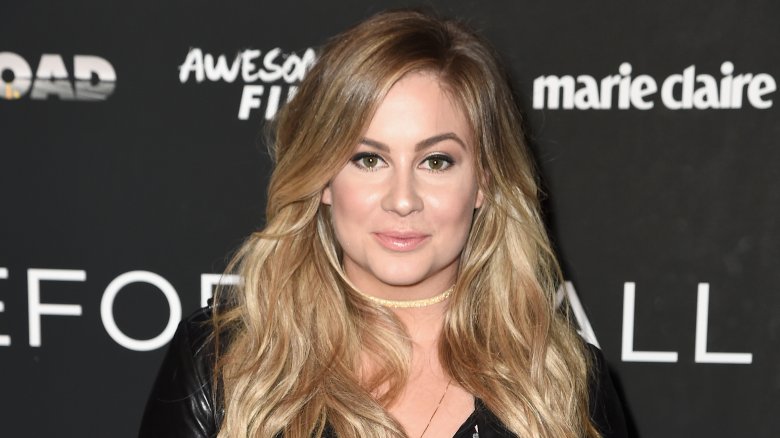
CoverGirl has boasted some pretty big names as its spokesmodels. Following Jennifer O'Neill'south debut as the first CoverGirl in 1963, other high profile spokeswomen have included U.Southward. gymnasts Shawn Johnson, Nastia Liukin, and Alicia Sacramone, as well every bit celebrities Drew Barrymore, Queen Latifah, Cheryl Tiegs, Rachel Hunter, Niki Taylor, and Molly Sims.
CoverGirl doesn't just wait for beautiful celebrities to stand for their brand. They also wait their spokespeople to embody characteristics that the company values. When Johnson, Liukin, and Sacramone were appointed as CoverGirl spokesmodels in 2008, vice president and general manager of CoverGirl Cosmetics in North America Esi Eggleston Bracey revealed the qualities they had that made them CoverGirl material. "Shawn, Nastia and Alicia are wonderful additions to the CoverGirl family, representing CoverGirl ideals of both inner and outer beauty," Bracey said in a press release (via Investor Hamlet). "We want to honor their confidence and help them smooth in the spotlight. Nosotros are thrilled they are lending their cute faces to CoverGirl."
CoverGirl was the starting time major cosmetics company to sign a blackness woman
Ben Gabbe/Getty Images
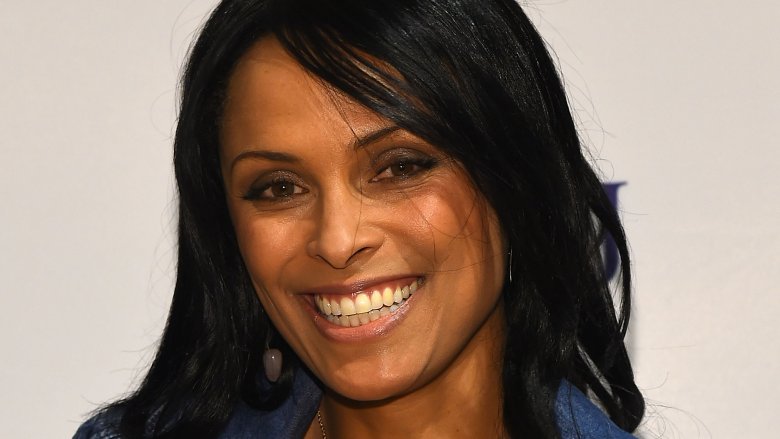
Fifty-fifty though CoverGirl originally only offered products in lighter shades, the cosmetics company would eventually become a champion of multifariousness. In 1992, model Lana Ogilvie became not just the first woman of colour to country a CoverGirl contract (viaEssence) but, co-ordinate to BET, she was as well the outset black adult female to represent a "not-ethnic cosmetics company." Ogilvie opened the door for black CoverGirls, and other black women shortly joined the CoverGirl ranks. Tyra Banks, Rihanna, and Janelle Monae are just some of the other blackness women who take been named CoverGirls.
CoverGirl has also, of course, expanded their range of shades offered. The brand has many dissimilar types of foundations these days and their skin tone offerings differ from product to product. Per their website, CoverGirl'south make clean powder foundation has but half dozen shades, only their full spectrum matte appetite foundation boasts twenty.
CoverGirl Christie Brinkley had the longest running cosmetics contract in the business organisation
Frazer Harrison/Getty Images
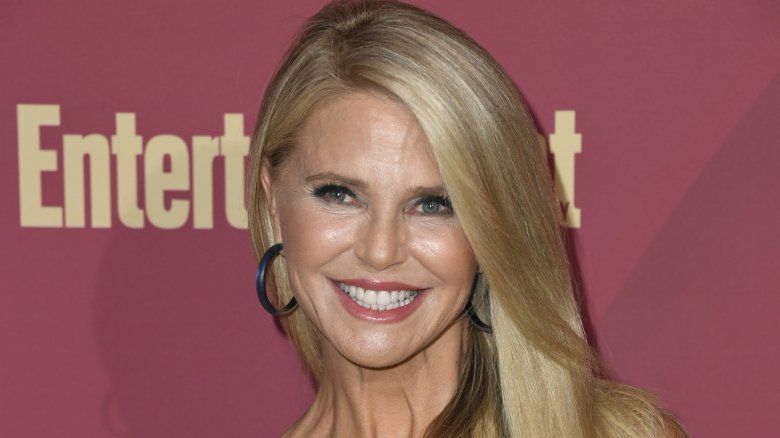
Model Christie Brinkley was with CoverGirl for decades, and she'southward had the dazzler manufacture's longest running cosmetics contract. Brinkley was named the face of CoverGirl in 1976, according toThe American Beauty Industry Encyclopedia, and she continued to exist ane of CoverGirl's spokesmodels for 25 years, as noted by Byrdie. Her date caused a huge ascension in CoverGirl's popularity. Information technology's clear that her impact on CoverGirl was massive, every bit it continues fifty-fifty today.
Brinkley has been around long enough to see the beauty and modeling industries alter significantly. "Authenticity is really being appreciated now, more so than when I started my career," the CoverGirl representative told Byrdie in 2018. "Information technology gives u.s.a. such a colorful prism to see the world through — dissimilar viewpoints; personalities; and unexpected, empowering moments. I think that'south a really beautiful, heady thing and a powerful thing for people coming up in the business at present. You don't have to feel so stagnant or similar you're waiting for an opportunity. You're making information technology, making opportunities every day. That'due south huge."
CoverGirl was one of the offset major companies to hire a male spokesmodel
Jamie Mccarthy/Getty Images
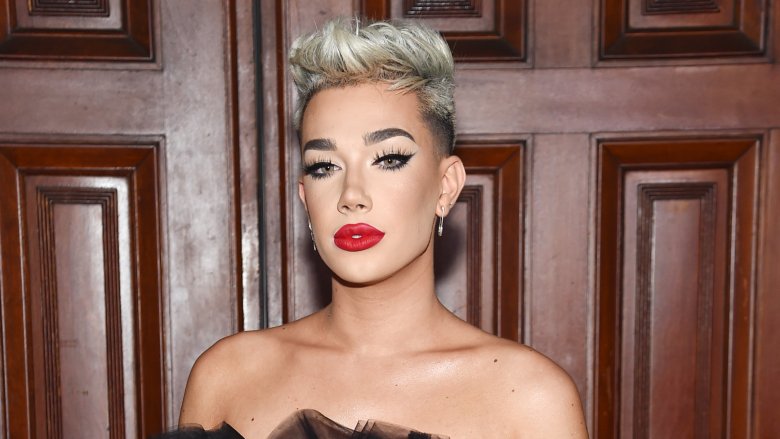
In 2016, CoverGirl became 1 of the first major cosmetic companies to defy gender norms by naming a man equally one of their spokesmodels. Makeup creative person James Charles, who rose to popularity on Instagram, was named the company'southward starting time male CoverGirl or, as Charles prefers to call himself, CoverBoy. "I was shook and didn't believe it at first, [but] when I found out it was a real opportunity, I literally screamed and then cried, I was and then excited," Charles told Cosmopolitan.
Only 17 at the fourth dimension, Charles would shortly be joined by other men repping cosmetics companies. His CoverGirl condition helped open the door for people of all genders representing beauty brands. In 2017, YouTube beauty guru Manny Gutierrez was named the first Maybelline New York ambassador (per Attraction). That same year, another social media makeup artist, Lewys Ball, was signed to represent Rimmel London (viaTeen Vogue).
CoverGirl helped push diverseness in the cosmetics manufacture
CoverGirl has promoted diversity past hiring members of other communities underrepresented in the beauty manufacture. In 2016, Nura Afia became the brand'due south offset Muslim ambassador. In 2018, model Amy Deanna became the first CoverGirl model to accept vitiligo, a condition which, as explained byThe Independent, causes white patches to appear on the skin due to a lack of pigmentation. The status affects i percent of the world's population, but, until Deanna came along, models with vitiligo hadn't appeared in major advertizement campaigns.
"Vitiligo awareness is something that is very important to me," Deanna told PeopleStyle. "Existence given a platform to do so means so much... At the end of the solar day I am but like everyone else, I simply happen to have spots. It'southward a office of my identity, but it doesn't ascertain who I am... For there to be so many of the states and so fiddling representation, it's truly disheartening. I work with CoverGirl; I'chiliad a black woman; I have vitiligo. That is empowering."
Procter & Hazard acquired CoverGirl in 1989
Astrid Stawiarz/Getty Images
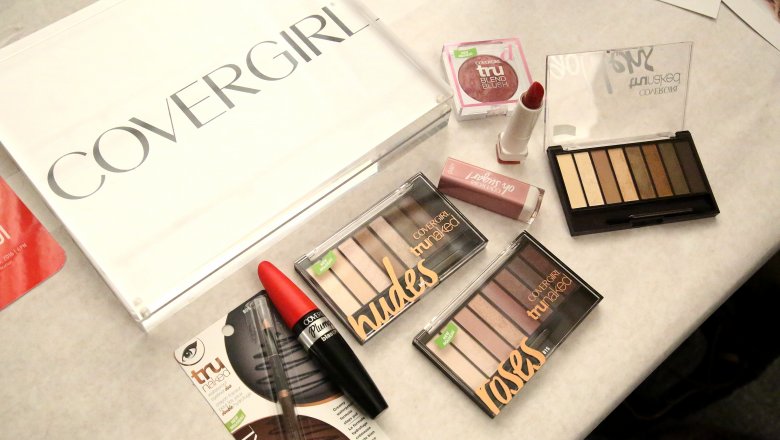
The Noxzema Chemical Company was somewhen renamed as the Noxell Corporation. The Noxell Corporation ran CoverGirl until the late '80s, by which time it had expanded beyond the United states of america and had broken into the global market place, peculiarly in Europe. While sales outside of Northward America were pocket-sized compared to the success CoverGirl saw in the United States and Canada, the line was still bringing in plenty money to attract the interest of bigger companies.
In 1988, Noxell was acquired by powerhouse Procter & Take a chance. Co-ordinate to Cosmetics and Skin, Procter & Run a risk was interested in ownership the visitor because of the wild success of the CoverGirl brand. Procter & Gamble did non have a makeup line among the many brands that it endemic at the time and was interested in adding ane. The company purchased Noxell Corporation in a $ane.3 billion "stock bandy deal."
CoverGirl was purchased by another big visitor in 2015
Astrid Stawiarz/Getty Images
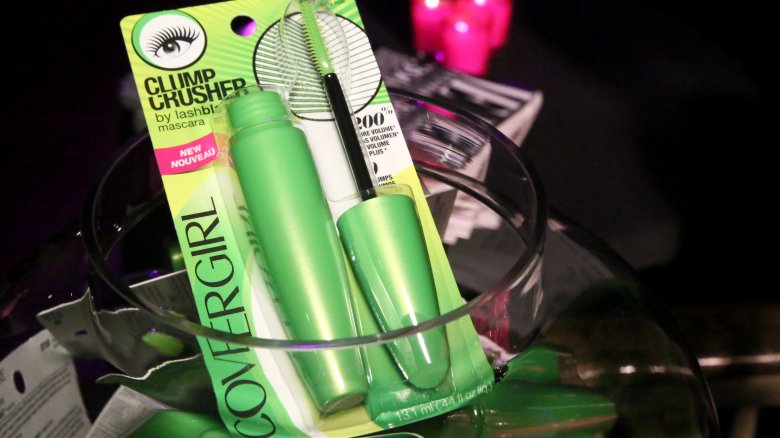
In 2015, Coty acquired CoverGirl, forth with 42 other beauty brands, from Proctor & Gamble in a $15 billion deal, as reported byThe states Today. The transaction made Coty 1 of the earth's largest beauty brands, giving them not only CoverGirl only other major lines like Clairol hair care and Max Cistron makeup. Coty already owned quite a few large label brands of its own at the time, including Calvin Klein perfume and Rimmel cosmetics. The acquisition didn't just brand Coty one of the world's biggest beauty brands, only also the world'southward top fragrance brand.
"With the beauty talent from both sides and the fantastic portfolio of world-class brands, we take the opportunity to create a highly focused, pure-play leader and challenger in beauty which tin evangelize heady opportunities and benefits for employees, licensors, customers and suppliers," said Bart Becht, Coty'southward chairman, at the time (via USA Today).
CoverGirl stopped testing on animals in 2018
Shutterstock
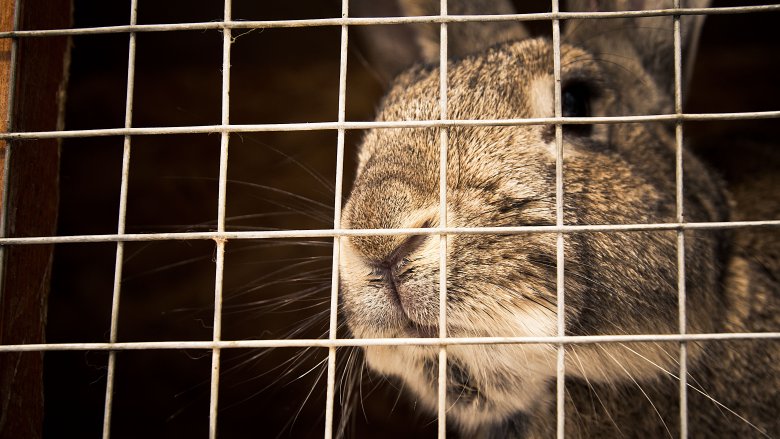
In 2018, CoverGirl made a large change that fabricated its products more than highly-seasoned to socially enlightened consumers. The visitor made the determination to become cruelty free, announcing that it would no longer exist testing products on animals and that CoverGirl products were officially certified by Cruelty-Gratis International. The system gave CoverGirl Leaping Bunny certification, a logo added to the company's products that assures buyers that none of the products or ingredients used by CoverGirl (or its suppliers) are tested on animals. "We're delighted to partner with Coty to end fell and unnecessary beast testing for cosmetics worldwide and take been impressed with the company's passionate commitment," CEO of Cruelty-Free International Michelle Thew said in a printing release (via Harper'south Bazaar).
She added, "The Leaping Bunny certification of COVERGIRL marks a new milestone in this area as the largest makeup brand to be certified cruelty free subsequently having met our rigorous criteria. It demonstrates how it'due south possible to be an attainable and innovative make without inflicting suffering on animals. We hope today'due south declaration encourages more cosmetics companies to practise the right thing."
How much longer tin CoverGirl stay in business?
Mike Coppola/Getty Images
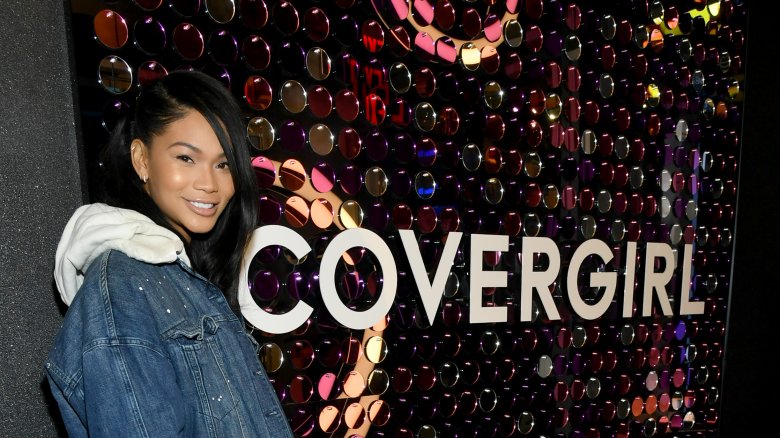
In spite of CoverGirl'due south seemingly large agree on the cosmetics industry, the brand isn't doing so well and its future may be in danger. In July 2019, shares of Coty plummeted as the company wrote down $3 billion in value of the brands they acquired from Procter & Gamble in 2016 — including CoverGirl. The Motley Fool reported in April 2019 that, according to data from S&P Global Market Intelligence, Coty stock lost 67 percent in value over the previous twelvemonth as CoverGirl and other Coty-endemic brands experienced failing sales due to supply chain disruptions and competition from newer brands, such as Kylie Cosmetics and Nyx.
Coty's four-year restructuring programme has the company feeling optimistic, though. In a call with analysts (via Reuters), Coty's CEO Pierre Laubies said, "If we are able to stabilize our share in this moderately declining category, this will permit Coty to return back to growth."
CoverGirl adopted a make new slogan in 2017
Cindy Ord/Getty Images
Later Coty acquired CoverGirl, the cosmetics line was rebranded. Its iconic slogan "Easy, Informal, Beautiful, CoverGirl" was retired and replaced with "I Am What I Make Upward." The change came near as CoverGirl wanted to emphasize that dazzler standards aren't quite and so standard as they have traditionally been and that y'all don't demand makeup to be beautiful.
"In leading the relaunch, we started with the insight that people no longer strive for a singular standard of dazzler, but use makeup as a tool for cocky-expression and personal transformation," SVP of CoverGirl, Ukonwa Ojo, said in an declaration (via Harper's Bazaar). "CoverGirl has always been inclusive and is known for pushing the boundaries of what it means to be cute, which means nosotros have a responsibility to drag how we connect and communicate with people. This is bigger than a new campaign or a tagline. Nosotros hope to spark a provocative dialogue that shifts cultural assumptions almost when, where, how and why people wearable makeup."

Where Is Cover Girl Makeup Made,
Source: https://www.thelist.com/168355/the-untold-truth-of-covergirl/
Posted by: bockmartyart49.blogspot.com
0 Response to "Where Is Cover Girl Makeup Made"
Post a Comment